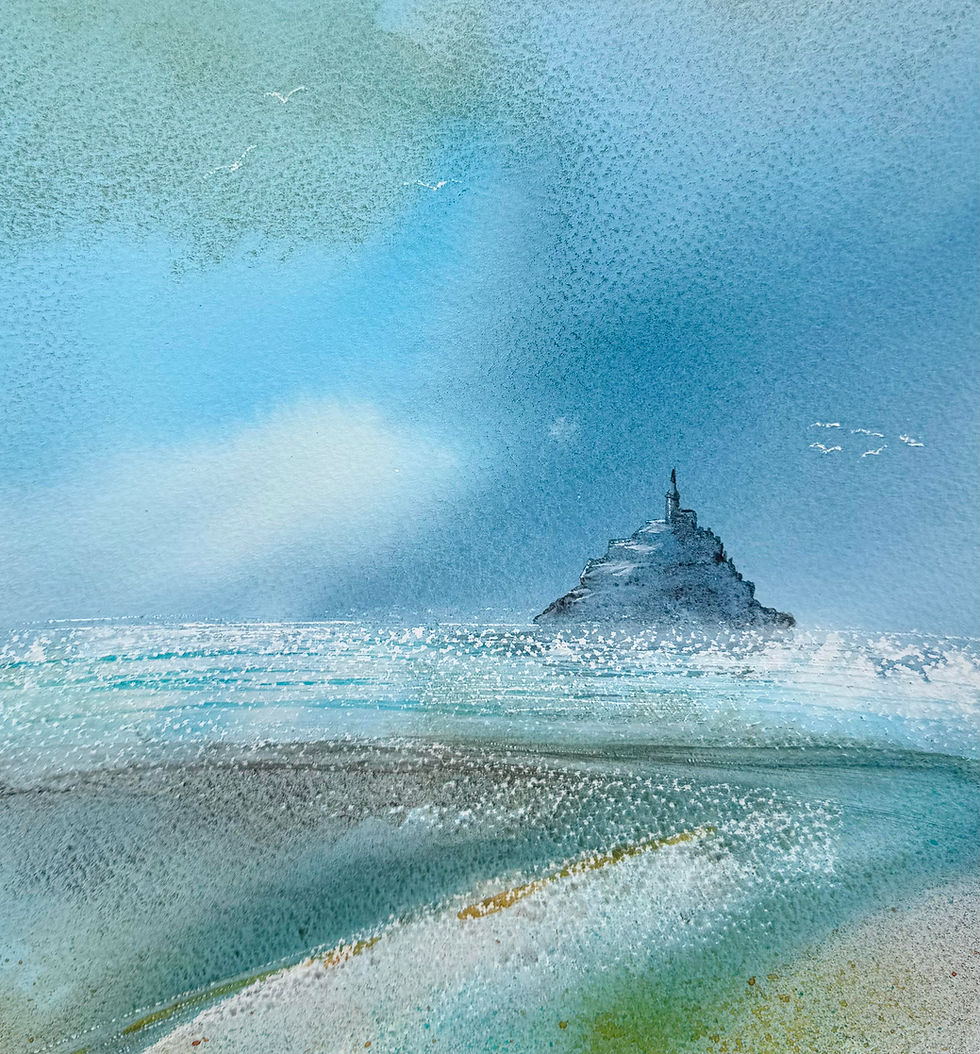
One Hour Painting Project: A Simple Landscape Using Just 2 Colours
Updated: Jul 27

If you’ve got an hour spare this week and you’re craving something calm, creative, and achievable, this simple watercolour landscape is a lovely place to begin.
This is an easy watercolour exercise designed to help you practise water control, explore soft blends, and create a peaceful sky and landscape using just two colours.
It’s ideal for beginners, but equally enjoyable if you’ve been painting for a while and want something gentle and expressive.
Why Try This Simple Watercolour Landscape Exercise?
This one-hour painting exercise focuses on the foundations of watercolour:
Learning how water affects your paint
Creating soft, natural blends
Letting go of overworking your painting
Building confidence with a limited colour palette
It’s not about perfection - it’s about allowing the paint to move and enjoying the process.
Materials You’ll Need
Keep it simple:
Watercolour paper, A4 or A5
A large soft brush, eg round no 12
Detail brush, eg rigger no 3
Water and a cloth
Just 2 watercolour paints
Suggested colour palette:
A blue (such as Ultramarine)
A warm colour (such as Burnt Sienna)
Using a very limited palette helps you stay focused and creates natural harmony in your painting.
Step 1: Wet the Paper for Your Sky
Lightly wet your paper with clean water. Take your time here - this step is key to creating a soft, blended sky. You’re aiming for a gentle sheen on the paper, not puddles. Tilt the paper to check you haven't missed any bits of paper. Good water control starts right at the beginning.
Step 2: Paint a Soft Watercolour Sky
Drop in your blue and allow it to spread naturally across the damp paper. You can tilt your paper to encourage movement. Add a touch of your warm colour to create variation and interest in the sky. Try not to overwork it - place the paint and observe what happens. This is where watercolour really comes to life.
Step 3: Create a Soft Horizon Line
As the paper begins to dry slightly, you can introduce a subtle shift near the horizon. This could be a gentle change in colour or tone to suggest distance. For example, stroke a clean, dry brush across the damp colour to create distant, hazy hills. Keep everything soft and minimal - this is a simple landscape, not a detailed scene.

Step 4: Add Minimal Land Shapes
Mix a darker tone using your 2 colours and paint a simple land shape along the bottom of the paper.
This could be:
A soft horizontal line
A slightly uneven edge
A darker band to ground the painting
Less is more here - resist the urge to add too much detail.
Step 5: Optional Details and Finishing Touches
Once your painting is dry, you can add a small focal point if you’d like.
This might be:
A tree
A few marks suggesting grasses, or birds
A hint of texture
Or you can leave it exactly as it is - simple, open, and spacious.

Tips for Better Watercolour Results
Work with the water, letting it lead
Stop before you feel “finished”
Allow soft edges to remain soft
Notice when you’re trying to control too much
Unexpected effects are often the most beautiful part of watercolour.
A Gentle Way to Practise Watercolour at Home
This easy watercolour landscape is a wonderful way to build confidence and develop your skills without pressure. Even if you only have an hour, you can create something calm and expressive—and learn a lot in the process.
Want to Explore This Further?
Enjoyed this project?
If you'd like to paint together in person, I run friendly watercolour workshops in North Yorkshire for beginners and improvers throughout the year. You can see all upcoming workshops here.